
Running BESS Day to Day: How Data Helps Troubleshoot Alarms Faster
A Q&A with Tuomo Salo, Head of Technology at Olana, on his daily work, the realities of BESS operations, and why unified data is essential for faster troubleshooting and better decisions.

Tuomo Salo is Head of Technology at Olana, where he helps turn battery storage projects into reliable, operating assets. In this interview, he shares what his day looks like, what makes BESS troubleshooting hard, and why having technical and revenue data in one place matters.
Key Takeaways
- The hardest part of BESS operations is root cause analysis: spotting issues is relatively straightforward, but proving what failed and why means digging through multiple layers of supplier diagnostics and data.
- BESS analytics can help solve operating challenges: by making data easy to understand and compare, and by providing a long-term historical record that supports faster troubleshooting and asset management.
- Operational transparency supported lower insurance premiums: Olana could reduce premiums by showing insurers clear evidence of monitoring, alarms, and historical performance.
- Revenue plus technical data in one place matters: integrating revenue data with analytics data creates a single view, so the team can quickly see whether a technical issue resulted in lost revenue.
Tuomo, how did you end up working in the BESS industry?
I joined Olana in 2023. I was one of the first recruits when the company was still focused on solar development. I saw that renewable energy is something Finland needs more of. We have plenty of wind, but solar is actually more feasible than people think. The solar irradiance is about the same as northern Germany. Finland has been shifting away from fossil fuel energy, so solar is one good option. I wanted to be a part of that and learn about the energy industry.
When Olana was still focused on renewables, it became clear the grid needs balancing assets. We shifted into balancing markets and ancillary services. Battery storage is the most practical option because it responds in seconds, works in both directions, and it’s easy to measure performance.
You’re Head of Technology at Olana. What are your main responsibilities and priorities?
I think about it as three topics day-to-day. Olana does the whole value chain: project development, construction, and operation.
My role is mostly tied to construction and operations. I define the technical parameters and requirements for new projects. When we have a land plot, I design the layout, access and maintenance, and technical sizing, power, and so forth with proven supplier equipment.
Then the second one is project management. Currently I’m project manager for our largest BESS project, which is in Lithuania, 70 MW/ 140 MWh. I’m accountable for the schedule and supplier coordination and making sure the technical choices are functioning seamlessly.
And in the third bucket I’m responsible for technical asset management. That includes overseeing technical performance, and if there are issues, diagnosing the root causes and coordinating with suppliers and external maintenance teams.
How does a typical day look like for you?
First thing in the morning, I check the asset management part of my job. Has something happened overnight in the operating assets? Are there new alarms or something our control room has noticed? Then I act on them. After that, most of the day is project work, discussing with suppliers, accepting and sometimes making designs.
What are some of the biggest challenges you’re seeing operating BESS?
The easy part is noticing something is wrong. You have alerts for that. The hard part is proving what is wrong, where it is, and what the root cause is. We care about performance drop and uptime. The cause could be the battery module, electrical contact, thermal management, inverters, or protection settings that have tripped. The issue is having visibility to find the root cause quickly.
It depends on the manufacturer and how good their diagnostics are. Sometimes you have to visit the site or connect to the equipment to find the alarms that caused something. Products and suppliers differ, so it takes a lot of digging through multiple layers of data to see what happened.
What’s valuable as an IPP is the feedback loop: we build the plant we later operate. So early decisions on layout, data access, and interfaces directly determine how easy troubleshooting and maintenance are for years.
Does it happen often that you need to go to the site, if you want to find a root cause?
Maybe once a quarter, not too often. Mostly we can remotely see it’s not urgent and it does not affect operation, so we can postpone and do multiple things at once. Sometimes we have urgent calls, and we need maintenance personnel to go to the site to return power to 100% or at least investigate the issue.
How does TWAICE support you in solving the challenges you just mentioned?
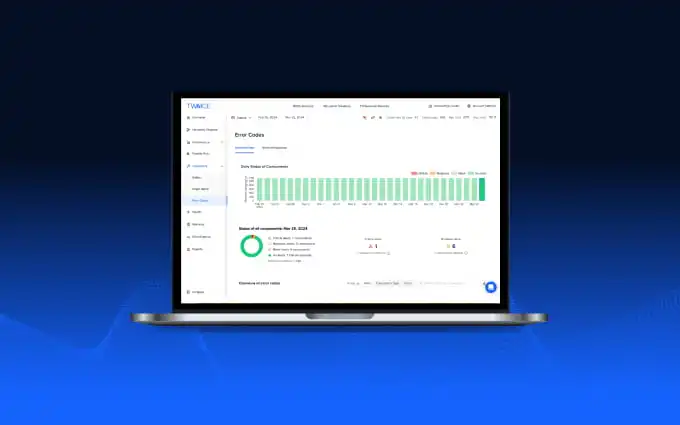
Mostly by presenting data in a clear way. And by having a historical record of relevant data. We can compare different parameters in the same graph. We can put all the battery racks in the same graph, compare between components, even between sites. Because it records all the data, we can go back to the beginning of the asset’s lifetime and check if something occurred previously. A good data log and good visualization help with troubleshooting and asset management.
And there’s the warranty aspect. If we want to make a warranty claim, we need proof to present to the supplier so we can claim something under warranty. Having that data log allows this.
The operational transparency also helped us reduce our insurance premiums, because we can show insurers clear evidence of monitoring, alarms, and historical performance.
You integrated revenue data into the TWAICE dashboard. Why is this integration important for you?
We used to have a separate platform to check revenue data. It’s good to have a streamlined way to check revenue data and technical data so they do not live in separate tools. It’s a quick one-stop for relevant data on the asset. If there’s a technical limitation, we can quickly check if it might have affected revenue potential.
And the more history we build in the data logs, the more useful this gets. Over time, we can start to see patterns. We can’t capture every parameter that affects revenue, but if we have years of data, we might find patterns where a technical parameter impacts revenue.
Lastly, what trend in the industry are you excited about?
I’m excited about potential new use cases for battery energy storage. In Finland, we mostly have national-level balancing and ancillary service mechanisms today, but I’m really interested in local flexibility markets. That would provide more sources of revenue for the assets, and it would also help with congestion, for example in the Helsinki area where there isn’t much local production anymore because coal plants have been shut down. The idea is that a battery could get information about the local status of the grid and help balance supply and demand in a specific area, even at a city level. That’s already in development here with a pilot program.
Another trend I’m watching is storage being used as an alternative to grid investments or reinforcement, especially in city areas where there isn’t much space for new substations or large infrastructure. Germany is actively developing this concept, treating storage as a transmission asset type use case, and I’m curious to see whether Finland moves in that direction too.
Sign up for the next live group demo and learn how TWAICE can transform your BESS operations. In just 30 minutes, you’ll get a demo of key features and use cases, and engage with our product experts for a live Q&A.
%20(1).webp)
%20(1).avif)
.avif)
About the Authors
Tuomo Salo
Tuomo Salo is Head of Technology at Olana Energy, a Finnish independent power producer specializing in grid-scale battery energy storage. One of the company's earliest employees, he holds a Master of Science (Technology) and has been central to Olana's growth into BESS, including architecting the asset management function for Olana's operational BESS fleet.