
"The Findings Matched Almost 100%": How Doosan GridTech Speeds Up O&M Work and Walks into Capacity Tests with Confidence
Stephen LaPlante, Head of Special Projects at Doosan GridTech, shares how TWAICE's BESS analytics transformed his team's maintenance workflow, from diagnosing on site and returning later with parts, to a single visit with parts already in hand.
.webp)
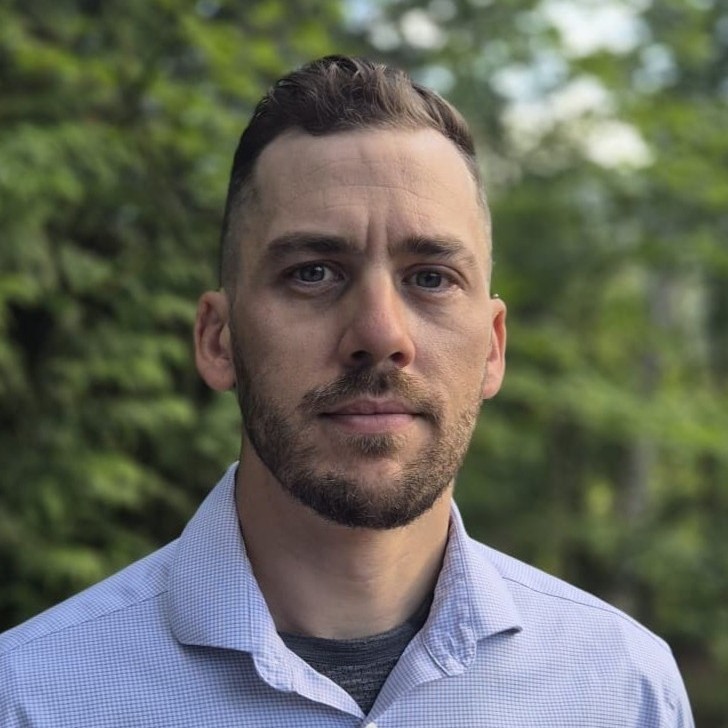
Stephen LaPlante is Head of Special Projects at Doosan GridTech, a BESS integrator and energy power plant controller software company that designs, integrates, and operates BESS across Australia and the United States. For system integrators, the gap between the data a battery management system reports and the true state of an asset can be the difference between a maintenance trip that fixes the right problem and one that doesn't. We sat down with Stephen on why his team went looking for a dedicated BESS analytics solution, and what changed once they trusted it.
Key Takeaways
- Streamlined O&M: maintenance shifted from two-trip process (first diagnose, then return with parts) to a single parts-ready visit.
- Data-led daily ops: the team now works from the anomaly list instead of combing through raw data to find what needs doing.
- Buy over build: rather than staffing a large in-house team to wrangle unreliable, high-volume BMS data, GridTech bought a ready-made intelligence layer that made the data accurate and actionable.
Stephen, how did you end up in the BESS industry?
I went to a career fair out of university and ended up doing a couple of internships with a start up that later became part of the integrator world I'm in now. Because the company was so small, i got to wear a lot of different hats: out interfacing with customers, working with the technology, sitting with the operations team. I fell in love with the industry and the opportunities, dove in deep, and never left.
What does a typical day look like for you?
I move up and down between two levels. Down in the trenches, I'm integrating new systems we're evaluating for our offering. This means sitting with our team, configuring a platform like TWAICE, testing its value proposition. My job is to get people using these tools and figure out whether they're genuinely useful.
At the higher level, I'm at conference talking to people across the industry: what's new? What new problems are people running into? Then I bring that back and think about what systems could address those pain points.
What prompted you to go looking for a third-party analytics solution?
Two reasons, really. First, the accuracy of the BMS data coming off the systems just wasn't there. The state of charge metrics, the energy metrics, they weren't reliable. Second, there's an enormous volume of raw data coming off the sites, and digesting it ourselves was an untenable problem. We'd have had to stand up a large, highly specialize data analytics team internally just to turn that data into operational, actionable insight.
So, we went looking for something that solved both: an intelligence layer on top of the data store that could run the data through machine-learning models to make it more accurate and then point us straight at the actionable insights, so we weren't slogging through it all ourselves.
Now that you've used TWAICE on a project, what's the biggest benefit you've seen?
The biggest thing is that it lets us move our O&M faster.
Here's the old workflow: a site is under performing, and there's a scheduled maintenance cycle coming up. The OEM's service team comes out, takes the site offline for a significant stretch, and inspects each module on each rack. They check temperature balance, state of charge, resistance, and all the metrics they use to decide which components need replacing or balancing.
But it's a two-part cycle. They investigate, you wait to procure replacement parts, and then you schedule a second crew to come out and actually carry out the repair. In some cases, the inspection alone takes the site offline for days, and then the parts lead time on top of that can be weeks to months once you know what you need.
With the insights from TWAICE, we' re cutting out the entire first part of the process. We can go straight to site with the replacement parts already procured, knowing exactly which elements to target and how to prioritize them. It's far more efficient: less time, more done while we're on site.
How did you make sure the team actually trusts the results from analytics?
We verified the findings. One of our sites in Australia was underperforming. Our O&M team carried out an onsite inspection, physically inspecting and testing the components, and grouped the issues into a few buckets: temperature imbalances, undervoltage, and voltage imbalances.
The TWAICE platform flagged the same at-risk strings and modules. Each flag also pointed toward a fix. Either you manually balance the cells within a module, or, if it's too far out of balance or too degraded to recover, you repair or replace the module.
When the report from our O&M team came back and we compared findings, they matched almost 100%.
So how does that change what your team does day-to-day?
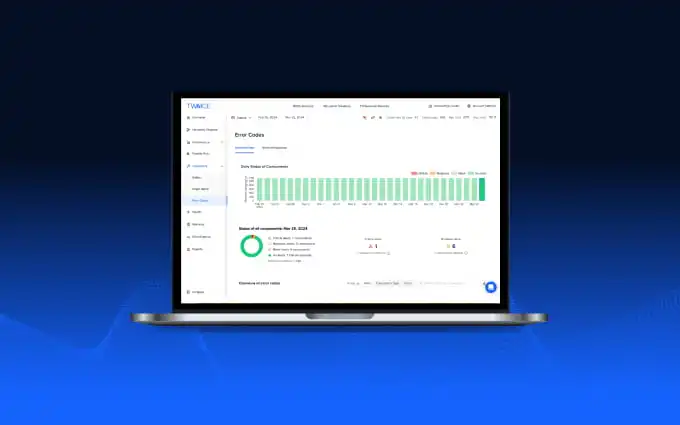
A lot of the team's daily flow now is keeping the anomaly list within the TWAICE platform cleared. In the morning, they log in, and if there's anything in the anomaly dashboard, that's the work. Previously, they'd be combing through raw data in Grafana: hunting, trying to find out whether there was anything to address, sometimes the whole team doing it at once. Now, they go straight to TWAICE to be led directly to what they should be doing today and plan for tomorrow.
And the next step is to merge the procurement piece in: instead of taking the site offline for days to generate are port on how many modules we need, the O&M team uses TWAICE to do that procurement ahead of time. We still send the same crew to site, but now they're verifying the platform's findings rather than discovering them. With the procurement already done, they can then do the repair work during the same onsite maintenance window. It completely merges the two halves of the process.
Does the platform ever change the recommended fix itself, not just the timing?
Yes. It gives us good insight into the best fix, both short-term and long-term. Sometimes we don't have to send anyone to the site at all. The platform might tell us a rack is severely underperforming and dragging down the rest of the bank it's connected to. If you just take that one rack offline, you open the rest of the bank's capacity back up. That's a strong short-term solution, and you can flag the full fix for the next scheduled maintenance window.
If we did see enough of a site affected to have real economic impact (to the point where a customer couldn't confidently participate in the markets they want to be in), that might trigger an out-of-cycle inspection. But generally, these activities run on a regular cadence, and the platform helps us decide when stepping outside that cadence is worth it.
Let's talk about capacity tests. How does analytics help there?
The same approach carries straight into capacity tests. Our contracts have periodic proof points where we run a full charge and discharge and show that the power and energy we said we'd deliver is delivered. And there's often not a lot of margin.
Before a capacity test, we need to prep the site and get all the modules in prime condition. The TWAICE platform absolutely helps integrators like us, who are on the hook for those guarantees. We schedule a test, maybe a month out, and take the site partially offline for prep. It tells us where the biggest opportunities are. With limited time (say we've got a day), one click sorts the highest-impact balancing activities we can take that day.
And the honest truth: we have not passed 100% of our performance guarantee tests in the past. Since using TWAICE, we have.
Do you see any other benefits with using analytics?
We've been talking about day-to-day operations, but there's a historical dimension too. Energy storage is new to all of our customers. They don't know what it looks like to own an asset across its full lifetime. When does it make sense to augment? When does it make sense to decommission?
The analytics platform tracks the relative workloads the components have taken on over time. You can see that half a system has gone through far more charge-discharge cycles than the rest, so when capacity starts to dip, those are the units to target for replacement/augmentation. Getting that picture of the operational and health profile over time tells our customers how much life is really left in the asset.
It's been compelling in the field. On a retrofit project we're looking at, the customer's pain point was exactly this: the system had been shoehorned into their PV operations group, changed hands a few times between newer renewable-energy teams, and the use cases kept shifting. They'd lost sight of the plant’s history and how healthy it was. We showed them the analytics dashboard and the reaction was: "That's exactly what we need. That illuminates a huge blind spot, and now we can plan the rest of this asset's lifetime."
Last question: what industry trend are you most excited about?
A little scared, a little excited, but mostly excited: AI data centers, and the new complexity they bring to energy storage. For the most part, system integrators have a handle on how to build and run storage efficiently. It's close to a solved problem. Now there's this whole new load profile and new componentry coming with data centers. People are talking about putting capacitor banks directly on server racks to handle momentary spikes, for example. That added complexity sounds like a genuinely fun challenge, and I think we're just ready to take it on.
Sign up for the next live group demo and learn how TWAICE can transform your BESS operations. In just 30 minutes, you’ll get a demo of key features and use cases, and engage with our product experts for a live Q&A.
%20(1).avif)
.webp)
.avif)
About the Authors
Stephen LaPlante
Stephen LaPlante is Head of Special Projects at Doosan GridTech, a BESS integrator and energy power plant controller software company that designs, integrates, and operates BESS across Australia and the United States. He has worked across the technology and operations sides of the business, and now focuses on evaluating and integrating new tools, including analytics platforms like TWAICE, into GridTech's O&M workflow.