Energy Storage Systems wind energy solar energy clouds verbund
News

VERBUND is using TWAICE´s analytics software

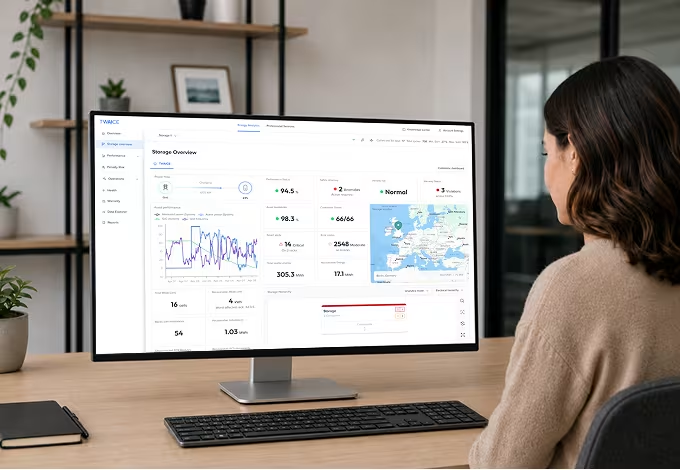
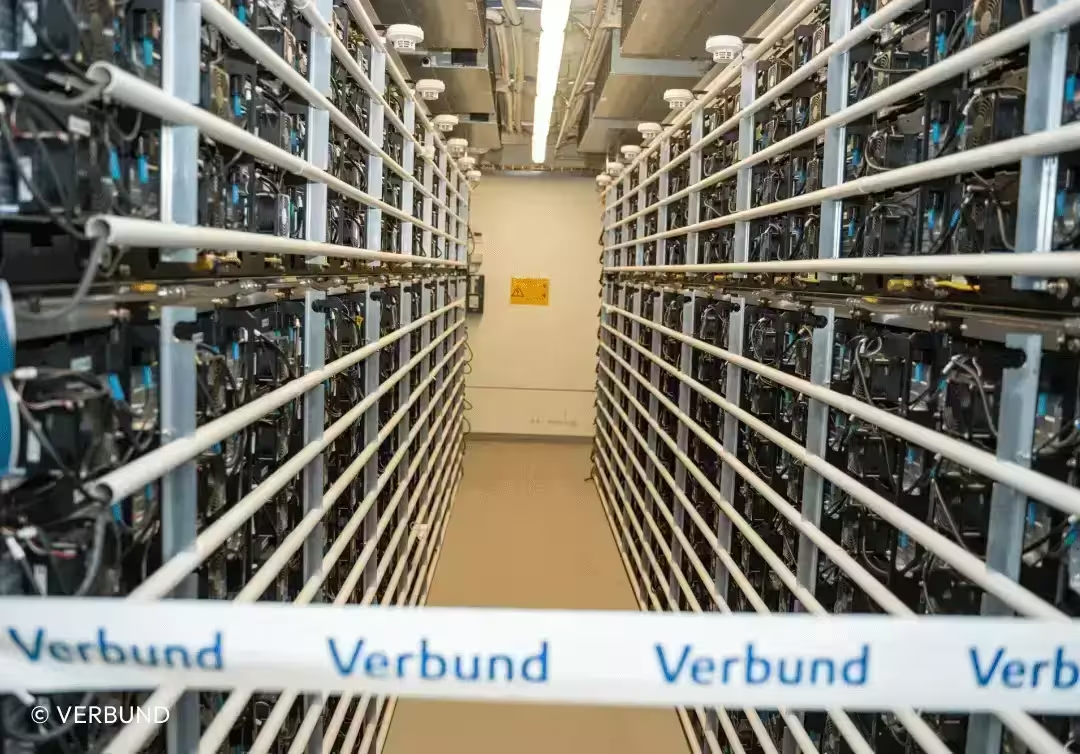
VERBUND, Austria's leading energy company, is using TWAICE's analytics software for battery-powered electricity storage applications. The TWAICE Operating Strategy Planner simulates the impact of different operating strategies on battery aging, giving storage operators an advantage in the volatile market of power generation and marketing. Predicting and evaluating battery aging through TWAICE's analytics software also reduces the risk of violating warranty terms.

TWAICE / Oct 05, 2021
Download the content

twaicetech

TWAICE helped me to learn more about: VERBUND is using TWAICE´s analytics software read article here:

www.twaice.com/newsroom/verbund-is-using-twaice-s-analytics-software

#thinktwaice

Verbund uses TWAICE software for optimal operation of its stationary battery storage systems

VERBUND, Austria's leading energy company, is using TWAICE's analytics software for battery-powered electricity storage applications. The TWAICE Operating Strategy Planner simulates the impact of different operating strategies on battery aging, giving storage operators an advantage in the volatile market of power generation and marketing. Predicting and evaluating battery aging through TWAICE's analytics software also reduces the risk of violating warranty terms.

Achieving predictability and profitability in a dynamic yet risk-averse market requires transparency into all contributing factors. With the help of holistic battery analytics from TWAICE, all players along the energy industry value chain, meaning operators, asset owners and integrators of battery storage systems, can better face their challenges, optimizing storage design and operating strategies. The clearer the view of the exact condition of the electricity storage system, its remaining service life, and future performance, the more accurate future strategies can be developed.

With TWAICE's Operating Strategy Planner, VERBUND can overview the respective KPIs, upload user-defined load profiles, retrieve predefined profiles and export the data resulting from the analyses. This insight into battery aging empowers VERBUND to accurately estimate costs and no longer just choose the highest-revenue operating strategy, but the most profitable one. The software also enables VERBUND to continuously monitor actual battery aging and take timely countermeasures if storage capacity or performance deviates from the ideal.

The stress factor analysis of the Operating Strategy Planner also provides valuable insights for the development of next-gen storages. VERBUND achieves greater flexibility and profitability with the new evidence base.


Live Group Demo

See TWAICE Energy Storage Analytics in Action

Sign up for the next live group demo and learn how TWAICE can transform your BESS operations. In just 30 minutes, you’ll get a demo of key features and use cases, and engage with our product experts for a live Q&A.

Sign Up
No items found.

Related Resources

February 11, 2026
February 11, 2026

Second Foundation Pioneers Data-Driven Operation with Three-Year Deal for BESS Analytics 

Second Foundation, a leading European power trader, expands its collaboration with TWAICE to a multi-site, 500+ MWh storage portfolio. The deal shows that as fleets grow, grid-scale operators are increasingly relying on BESS analytics to proactively manage storage risk and optimize performance. 
February 5, 2026
February 5, 2026

EIB Invests €24 Million in TWAICE to Accelerate the Energy Transition with Predictive Battery Analytics

TWAICE, the analytics platform built for real-world battery energy storage operations at scale, has secured €24 million in financing from the European Investment Bank (EIB), provided as a long-term venture debt loan, backed by the InvestEU programme.
February 4, 2026
February 4, 2026

BESS Industry Survey: Rapid Growth Puts Operational Efficiency to the Test

Newest edition of TWAICE’s BESS Pros Survey highlights time-intensive investigations, fragmented data, and unclear accountability as key constraints