Newest edition of TWAICE’s BESS Pros Survey highlights time-intensive investigations, fragmented data, and unclear accountability as key constraints










%201%20(5).avif)






.avif)


Download the content


Newest edition of TWAICE’s BESS Pros Survey highlights time-intensive investigations, fragmented data, and unclear accountability as key constraints
The second edition of TWAICE’s annual BESS Pros Survey and resulting industry report highlight how the rapid growth of grid-scale battery energy storage systems (BESS) is widening the gap between the pace of deployment and operational readiness. The findings are based on responses from more than 100 professionals directly involved in BESS operations.
Building on last year’s survey, which explored changing operational priorities as BESS deployments expanded, this year’s findings focus more directly on how those priorities translate into day-to-day operational efficiency as portfolios scale. Key findings include:
The findings in the 2026 BESS Pros Survey suggest many operational practices are still evolving to keep pace as portfolios grow in size and complexity. Many teams still rely on reactive processes, with issue resolution consuming significant time and directly affecting commercial outcomes. These challenges are amplified by unavoidable complexity, including multi-vendor fleets, compliance requirements, and inherited tool stacks from acquisitions and rapid portfolio growth.
“Grid-scale BESS is entering a new phase,” said Stephan Rohr, CEO at TWAICE. “The industry has proven it can deploy at scale; now the question is whether operations can keep up. As portfolios expand, operational practices need to mature alongside that growth, so teams can manage complexity, resolve issues faster, and protect performance.”
When it comes to supplier relationships, the survey presents a mixed picture around issue resolution. Operators frequently report revenue-impacting issues and time-consuming investigations, yet nearly half (48%) of asset owners rate their suppliers’ accountability for resolving problems as positive.
Survey findings suggest that formal accountability mechanisms alone do not necessarily translate into faster resolution or reduced downtime. While long-term service agreements (LTSAs) dominate the O&M model (used by 73% of respondents), accountability for resolving problems remains one of the weakest-rated areas.
Moreover, unclear performance definitions, escalation paths, and ownership appear to contribute to slower response times, aligning with 47% of respondents who cite difficulty holding suppliers accountable to performance promises as a top challenge.
The survey finds that data access itself is not the primary issue. Half of respondents cite a lack of a single source of truth as a top challenge, as operators juggle multiple portals, tools, and dashboards, and inconsistent KPI definitions.
“What stands out is not a lack of data in BESS operations, but the difficulty of turning that data into something teams can confidently act on,” Rohr added. “As BESS deployments scale, trust and usability become just as important as access.”
The report is based on the 2026 BESS Pros Survey, which received 117 qualified responses from professionals directly responsible for managing, overseeing, or operating BESS projects worldwide.
The full findings are available here.
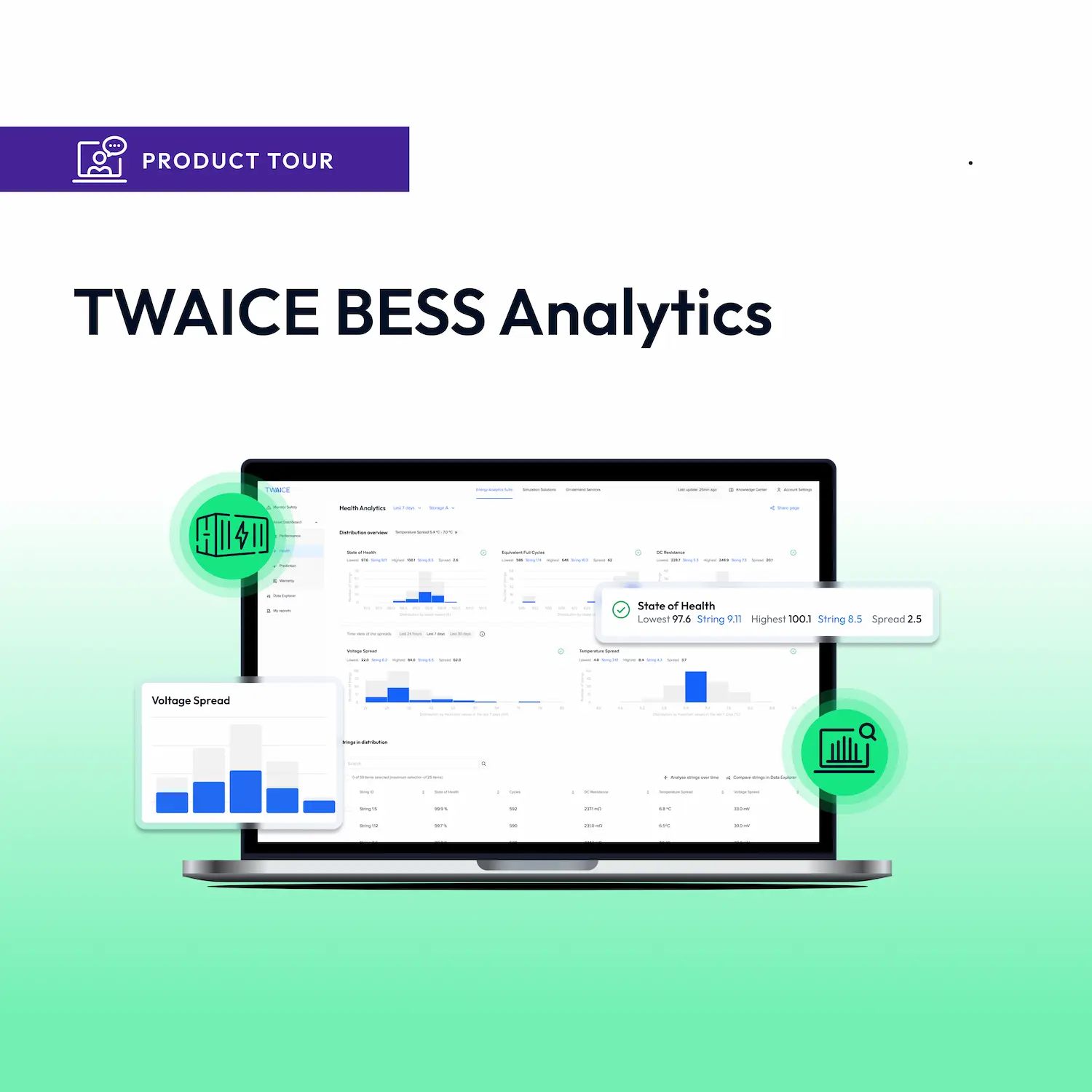
Watch this 5-minute video and learn how you can use TWAICE to transform your battery energy storage operations at scale.

%20(1)%20(1)%20(1).avif)